Best philanthropic or fundraising collaboration
This award recognises collaborations between a philanthropic or fundraising individual or organisation and one or more creatives. The judges looked for collaborations that demonstrated philanthropy in action.
WINNER: The Inter[net]vention - Digital Suicide Prevention Campaign, nominated by BCM Group, in collaboration with LIVIN
BCM Group is a full-service communications agency that created the concept, led the media approach and launched and deployed The Inter[net]vention - Digital Suicide Prevention Campaign.
With media partners including Yahoo, Newscorp, Google, NZME, IAS and DoubleVerify, the pro bono contribution to the campaign was in the order $500,000.
The project was undertaken on behalf of and in collaboration with LIVIN, one of Australia’s leading suicide prevention and mental health organisations.
In its submission, BCM Group said that more than 65,000 Australians attempt suicide every year and the warning signs can be invisible, making it impossible to identify people and to help.
But they found one place where at-risk individuals could be identified.
More than 28,000 people search for high-intent suicide content every month online, so BCM Group created an AI-powered, targeting algorithm to identify high-risk suicidal individuals online.
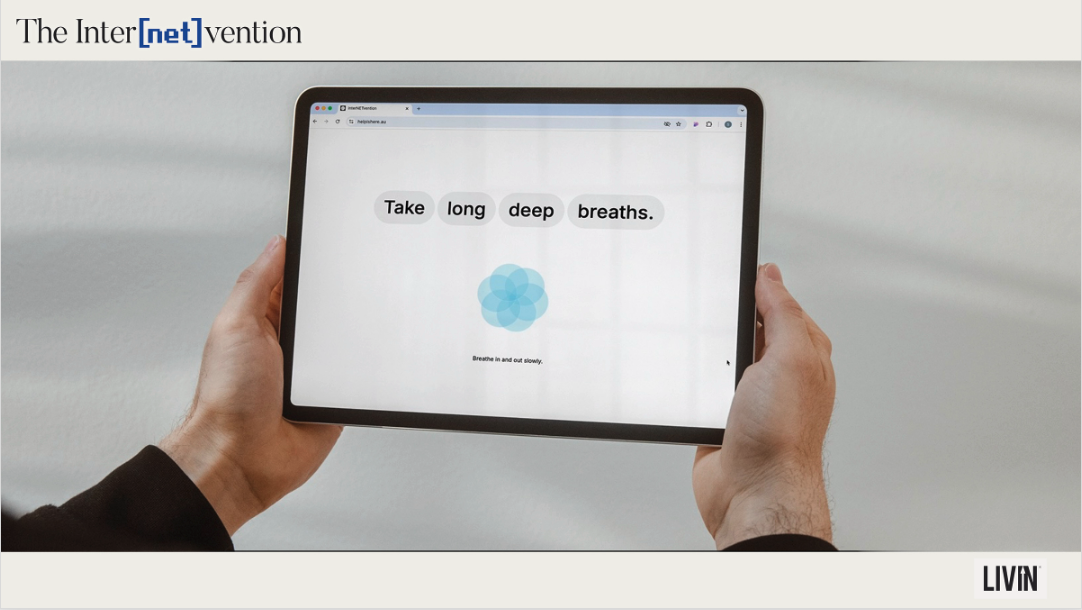
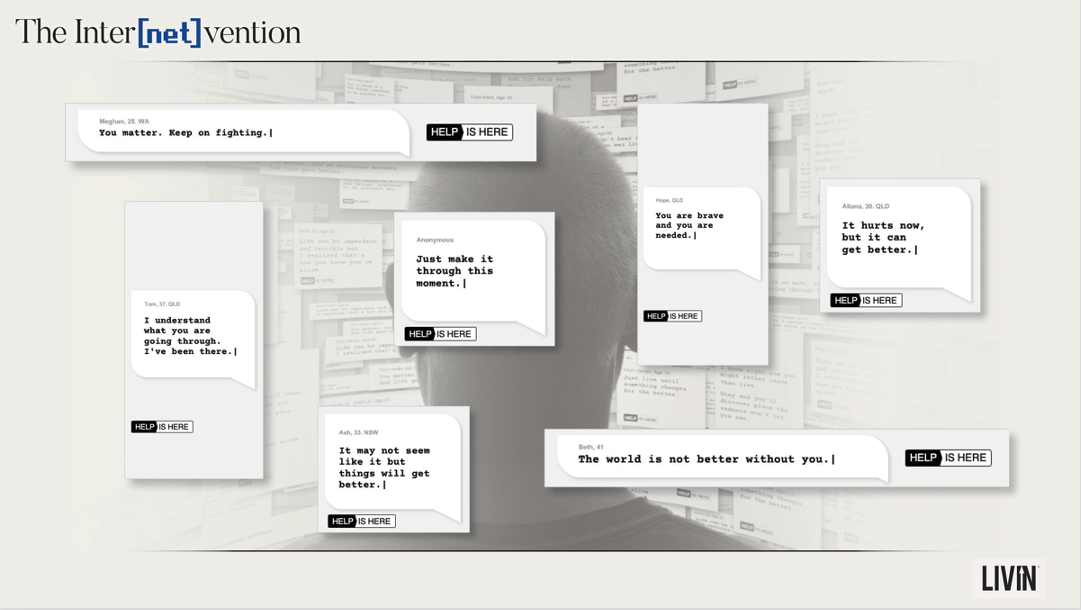
They then used retargeting banners and videos - normally used to resell products and services - to resell life itself, surrounding individuals with hundreds of crowd-sourced messages, encouraging them to hold on.
BCM Group said media red tape and brand safety measures had previously made such work prohibitive, as content or targeting relating to suicide could be blocked.
The collaboration with media partners cut through the red tape, allowing help services to deliver preventative messaging directly to at-risk internet users.
As a result of the campaign – which went national and is now permanent- every $50 of media invested resulted in 10 people calling help services.
The work and data from the campaign is being made open source to ensure others can help even more people, and audience data is being made available to real-world help services to better coordinate their efforts.